Gang He
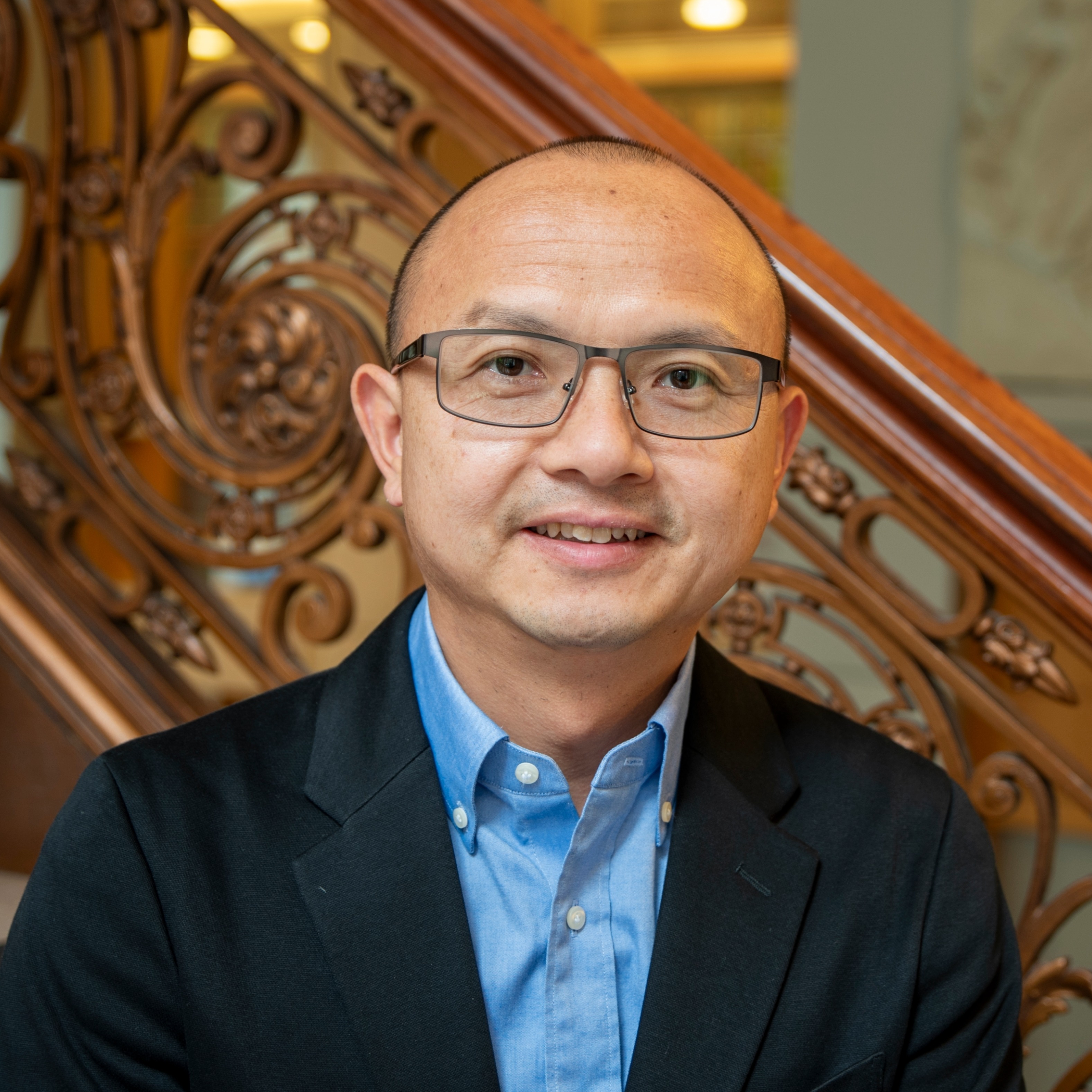
Gang He
Associate Professor
Marxe School of Public and International Affairs
Baruch College
City University of New York
Email: gang.he@baruch.cuny.edu
 CUNY Profile
 Dimensions
One-line Bio (20 words)
Gang He is an energy scholar, researcher, and teacher whose research focuses on the intersection of energy systems, climate policy, and sustainable development.
Short Bio (50 words)
Gang He is an Associate Professor at CUNY Baruch College, and founder and director of the Deep Energy and Climate Policy Lab. His research focuses on energy systems, climate policy, and sustainable development, with an emphasis on advancing sustainable, resilient, and equitable pathways toward deep decarbonization and carbon neutrality.
Speaker Bio (100 words)
Gang He is an internationally recognized energy and climate scholar and Associate Professor at the Marxe School of Public and International Affairs, CUNY Baruch College, where he founded and directs the Deep Energy and Climate Policy Lab. His research examines the transformation of energy systems and the policies needed to achieve deep decarbonization while advancing sustainability, resilience, and equity. His work has appeared in leading journals including Nature, Nature Energy, Nature Communications, and One Earth, and has informed major international assessments and policy processes. He is a Public Intellectuals Program Fellow and has been recognized among the Stanford/Elsevier World’s Top 2% Scientists.
Long Bio (200 words)
Gang He is an Associate Professor with tenure at the Marxe School of Public and International Affairs, Baruch College, City University of New York (CUNY), and founder and director of the Deep Energy and Climate Policy Lab. He also serves as Doctoral Faculty at the CUNY Graduate Center and a Faculty Affiliate at the CUNY Institute for Demographic Research.
His research focuses on energy systems, climate policy, and sustainable development, with an emphasis on pathways to carbon neutrality and a more sustainable, resilient, and equitable clean energy transition. His work has appeared in journals including Nature, Nature Communications, Nature Energy, One Earth, Environmental Science & Technology, and Energy Policy, and has informed major assessments and policy processes, including the IPCC Sixth Assessment Report and New York State’s climate planning.
He has contributed to U.S.-China cooperation on energy and climate change and is a Public Intellectuals Program Fellow of the National Committee on U.S.-China Relations. He has been recognized on the Stanford/Elsevier World’s Top 2% Scientists List for three consecutive years (2024–2026). He received his Ph.D. in Energy and Resources from University of California, Berkeley, an M.A. from Columbia University, and B.S. and M.S. degrees from Peking University.
Full Bio (500 words)
Gang He is an energy scholar, researcher, and teacher whose research focuses on the intersection of energy systems, climate policy, and sustainable development. He is an Associate Professor with tenure at the Marxe School of Public and International Affairs, Baruch College, City University of New York (CUNY). He also serves as Doctoral Faculty in Earth and Environmental Sciences at the CUNY Graduate Center, and is a Faculty Affiliate at the CUNY Institute for Demographic Research. He is the founder and director of the Deep Energy and Climate Policy Lab, aiming at deep analysis and deep insights for deep decarbonization.
He teaches Energy, Climate, and Society at the undergraduate level, and Energy and Climate Policy and Program Evaluation at the graduate level. He organizes the Climate Guest Speakers series which brings in experts and professionals to talk about climate challenges and solutions to inspire the next generation of climate leaders.
His research explores how the world can achieve carbon neutrality by mid-century to address climate change—and how the clean energy transition can be made more sustainable, resilient, and equitable. His leading and collaborative work has appeared in high-impact interdisciplinary and field journals such as Nature, Nature Communications, Nature Energy, One Earth, Environmental Science & Technology, and Energy Policy.
His research has been supported by a diverse range of sources, including federal and state agencies, NGOs, foundations, and industry partners. His work has been reported by leading outlets such as Nature, The Economist, The New York Times, Scientific American, Carbon Brief, National Geographic, and E&E News.
His work has informed policy discussions and processes. His research findings have been cited in notable reports by global institutions such as the IPCC (AR6), IIASA, World Bank, UNEP, IRENA, WTO, SEI, IISD, CSIS, and Brookings. He testified for the New York State Climate Leadership and Community Protection Act and has advised the New York State Climate Action Council’s Scoping Plan. He has also been involved in the U.S.-China collaboration on energy and climate change as an expert member in the energy transition sub-working group of the U.S.-China Working Group on Enhancing Climate Action in the 2020s.
He has been selected as Asia 21 Young Leaders (2007), Aspen Environment Forum Scholars (2011), Young Scholar of the Institute for New Economic Thinking (2013), ITIF Energy Innovation Policy and Management Scholar (2019), Public Intellectuals Program Fellow (2025) of the National Committee on US-China Relations, and recognized as World’s Top 2% Scientists (2024–2026) on the Stanford/Elsevier Top 2% Scientists List.
He has worked for the Department of Technology, AI and Society at Stony Brook University, the Energy Technology Area at Lawrence Berkeley National Laboratory, and the Program on Energy and Sustainable Development at Stanford University. He received his Ph.D. in Energy and Resources from University of California, Berkeley. He also holds an M.A. in Climate and Society from Columbia University, and a B.S. and M.S. in Geography from Peking University.