Lecture 7 Evaluation Designs: Qualitative Methods
Gang He
October 20, 2026
Recap lecture 6
- Quasi-experimental design
- Instrumental variable (IV)
- Regression discontinuity
- Difference in differences
- Matching
- Case:
- Air quality and Life Expectancy
- Alcohol access and mortality
Today’s agenda
- Case Study
- Case: NYC Gifted and Talented (G&T) Program
Capturing the wedge
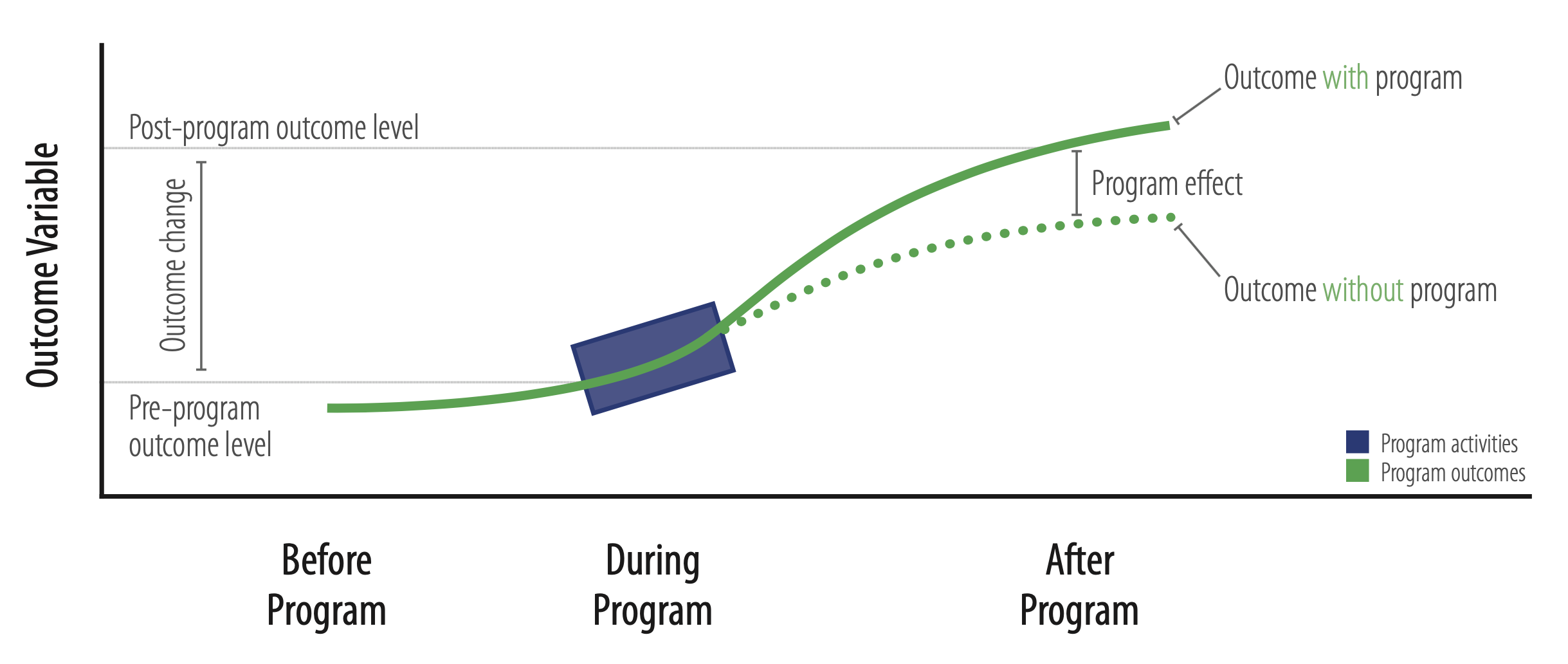
Source: Andrew Wheiss
Evaluation designs
- Experimental
- Randomized controlled trial
- Quasi-experimental
- Instrumental variable (IV)
- Regression discontinuity (RDD)
- Difference in differences (DiD)
- Observational (Non-experimental)
- Time–series analysis (Pre- and post-intervention studies)
- Cross-sectional surveys
- Case studies
Case Study vs. Quantitative Impact Evaluation
| Dimension | Quantitative Impact Evaluation | Qualitative Case Study |
|---|---|---|
| Main questions | Does it work? How much? | How and why does it work? |
| Primary focus | Causal effects and outcomes | Processes, mechanisms, context |
| Typical methods | RCT, RDD, DiD, IV | Interviews, observations, documents |
| Data | Numerical, structured | Textual, observational, documentary |
| Strengths | Estimates program impacts | Explains implementation and experiences |
| Limitations | May not explain mechanisms | Limited statistical generalization |
Key takeaway: Quantitative methods estimate program impacts; qualitative case studies help explain how and why those impacts occur.
Case study questions
| Item | Assignment |
|---|---|
| Exercise | Suppose you are working for GAO and have been asked whether the informed consent requirements for experimentation with human subjects are being properly implemented. Suppose further that we visit three sites where humans are used as subjects for research— a hospital, a university, and a clinic— and that we review the informed consent procedures at each site. |
| Question 1 | Is this an application of the case study method? Why? |
| Question 2 | If not, would case studies be appropriate for answering the question we were asked? Why? |
| Question 3 | What is your definition of “case study”? |
Source: Adapted from GAO, Case Study Evaluations
What is a case study?
A case study is a method for learning about a complex instance, based on a comprehensive understanding of that instance obtained by extensive description and analysis of that instance taken as a whole and in its context.
Source: GAO, Case Study Evaluations
Case study
- The “Why” and “How” questions
- Exam program implementation
- Program must adapt to organizational context and local conditions
Source: Newcomer et al. (2015)
Categories
- Illustrative: descriptive, add realism and in-depth examples
- Exploratory: descriptive, defining the questions and hypotheses for later investigation
- Critical instance: critical test of an assertion about program, problem or strategy
- Program implementation: operation and norms about implementation
- Program effects: cause-and-effect relationships, involve multiple sites and multiple methods
- Cumulative: brings together findings from many case studies
Source: Newcomer et al. (2015), GAO, Case Study Evaluations
Steps in case studies
- Designing the Case Study.
- Define the research questions.
- Develop a framework to identify study dimensions.
- Determine the unit of analysis.
- Establish a single-case or multiple-case design.
- Define the research questions.
- Conducting the Case Study.
- Develop protocols.
- Select qualified staff and provide training.
- Implement strategies for collecting data, typically from multiple sources.
- Develop protocols.
- Analyzing the Data.
- Create a database.
- Use specific techniques to analyze the data.
- Preparing the Report.
- Determine the audience and the organizational structure for the report.
- Include context and data collection strategies in addition to findings.
- Outline limitations or cautions.
- Determine the audience and the organizational structure for the report.
Source: Newcomer et al. (2015)
Common Data Collection Methods
Interviews: Understand individual experiences and perspectives
Focus groups: Explore shared experiences and differences
Observations: Examine how programs operate in practice
Document analysis: Review policies, reports, and administrative records
Surveys: Collect structured information from participants
Triangulation: Strengthening Evidence
Compare findings across multiple sources and methods.
Example: Why is participation in a workforce program declining?
Interviews → Participants report transportation barriers
Administrative data → Attendance is lower in distant neighborhoods
Observations → Limited transportation options near program sites
Converging evidence strengthens the explanation.
Example: Case study of a food assistance program
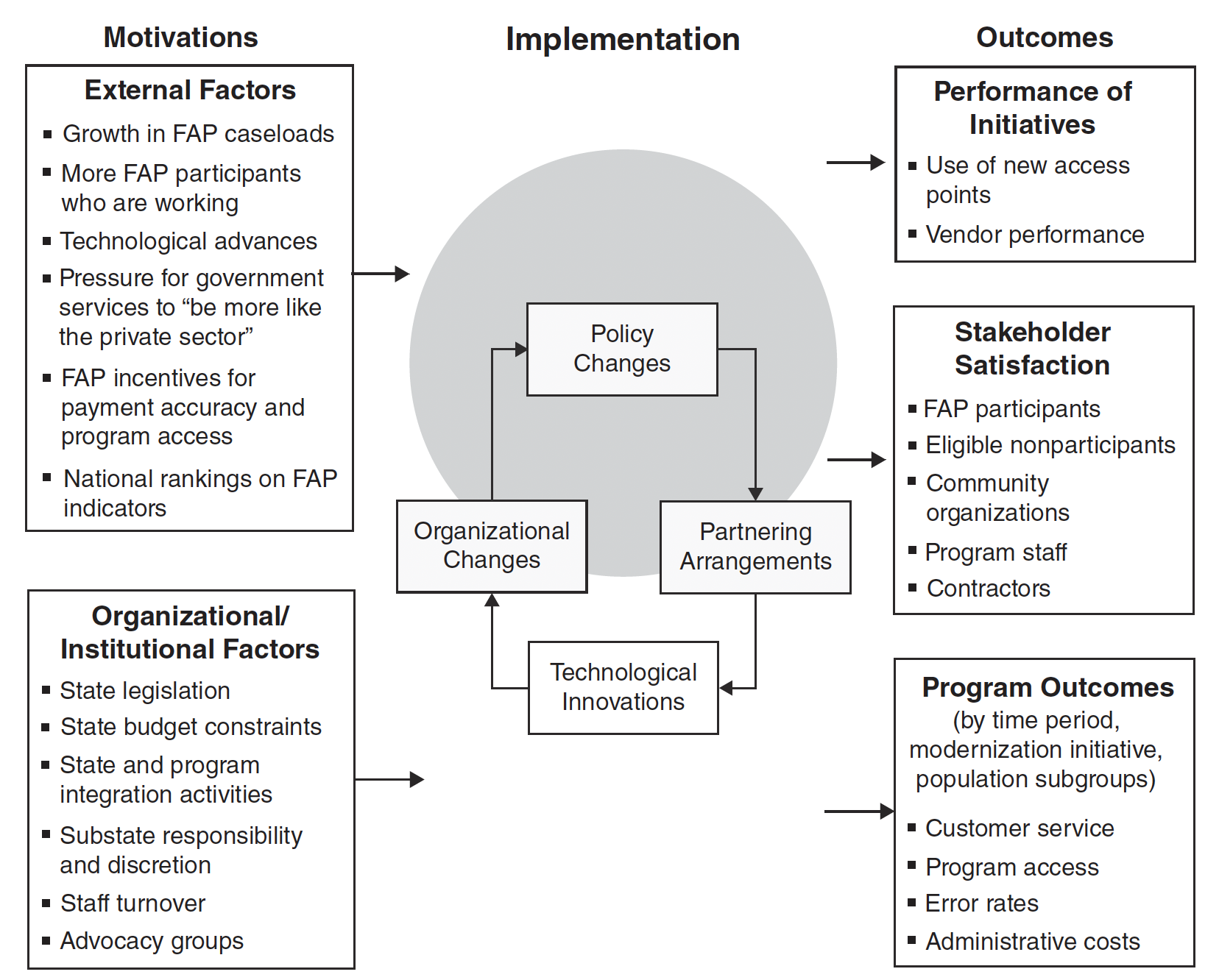
Source: Newcomer et al. (2015)
Case Study Exercise: NYC Gifted and Talented Program
Scenario: NYC wants to evaluate the implementation, accessibility, and effectiveness of its Gifted and Talented (G&T) Program.
Group Discussion (10 minutes)
| Topics | Evaluation Focus | Research Question |
|---|---|---|
| 1 | Access and Equity | What factors influence whether families apply? |
| 2 | Implementation | How do schools differ in implementing G&T? |
| 3 | Stakeholder Perspectives | How do parents and teachers define success? |
| 4 | Program Improvement | What changes could improve accessibility? |
Designing case study
- Define the research questions
- Develop a framework to identify study dimensions
- Determine the unit of analysis
- Establish a single-case or multiple-case design
- Select cases or sites
Avoiding common pitfalls
| Problem | Solution |
|---|---|
| Limited generalization | Sites selection Acknowledge limitation |
| Too much data | Research framework Protocols |
| Impartiality | Review interview Multiple data collection Supervision and training |
| Premature conclusions | Multiple data analysis Rival hypotheses |
| Narrative bias | Understand audience Explicit interpretation |
Summary
Objectivities
Generalization and replication
References
Newcomer, Kathryn E., Harry P. Hatry, and Joseph S. Wholey. 2015. Handbook of Practical Program Evaluation. 4th edition. Jossey-Bass.